
The Ultimate Guide to Home Coffee Brewing: Café-Quality Results in Your Kitchen
There’s nothing quite like the aroma of freshly ground coffee beans filling your kitchen in the morning. But if you’re still buying pre-ground coffee or grinding your beans days in advance, you’re missing out on one of the most crucial elements of exceptional coffee brewing. The secret to transforming your home coffee from mediocre to magnificent lies in understanding why grinding right before brewing is absolutely essential for flavor perfection.
The Science Behind Fresh Grinding: Why Timing Matters
When coffee beans are ground, they undergo a dramatic transformation that directly impacts your cup’s flavor profile. The moment those beans are broken down, they begin releasing volatile compounds and oils that create coffee’s complex flavor and aroma. These compounds are extremely delicate and start degrading within minutes of grinding.
Coffee beans contain over 800 different aromatic compounds, and once exposed to air through grinding, these compounds begin to oxidize rapidly. This oxidation process is what causes that stale, flat taste in pre-ground coffee. In fact, coffee loses up to 30% of its flavor compounds within just 15 minutes of grinding, and up to 60% within an hour.
The protective outer shell of whole coffee beans acts as a natural barrier, preserving these precious oils and compounds until you’re ready to extract them. This is why grinding right before brewing makes such a dramatic difference in your coffee’s taste, aroma, and overall quality.
Surface Area and Extraction: The Key to Balanced Flavor
When you grind coffee beans, you’re dramatically increasing the surface area exposed to water during brewing. This increased surface area allows for optimal extraction of flavors, but it also means that ground coffee becomes vulnerable to environmental factors much faster than whole beans.
The extraction process is all about balance. You want to extract the desirable compounds (sugars, acids, and aromatic oils) while avoiding over-extraction of bitter compounds. Fresh grinding ensures that you’re working with coffee at its peak potential, giving you maximum control over this delicate balance.
Different brewing methods require different grind sizes to achieve optimal extraction:
- Espresso: Fine grind for quick, high-pressure extraction
- Pour-over: Medium grind for controlled, even extraction
- French press: Coarse grind for longer steeping time
- Cold brew: Extra coarse grind for extended contact time
The Enemy of Great Coffee: Oxidation and Staleness
Coffee’s biggest enemies are oxygen, light, heat, and moisture. Once coffee is ground, its dramatically increased surface area makes it exponentially more vulnerable to these elements. Pre-ground coffee sitting on store shelves or in your pantry for weeks or months has already lost most of what makes coffee special.
Oxidation doesn’t just affect flavor; it also impacts the coffee’s ability to produce that beautiful crema in espresso or the proper bloom in pour-over brewing. Fresh-ground coffee releases CO2 when it comes into contact with water, creating that satisfying foam and indicating active, flavorful coffee. Stale, pre-ground coffee lacks this vital characteristic.
Choosing the Right Grinder: Consistency is King
Not all grinders are created equal, and the quality of your grinder directly impacts your coffee’s flavor. The goal is to achieve uniform particle size, which ensures even extraction and balanced flavor in every cup.
Blade grinders, while affordable, create inconsistent particle sizes through violent chopping action. This inconsistency leads to uneven extraction, where some particles are over-extracted (bitter) while others are under-extracted (sour).
Burr grinders, on the other hand, crush beans between two surfaces, creating uniform particles and giving you precise control over grind size. The TIMEMORE Chestnut C2 Manual Coffee Grinder exemplifies this superior approach with its CNC stainless steel conical burr system.
The TIMEMORE Advantage: Precision Engineering for Perfect Grinding
The TIMEMORE Chestnut C2 represents the perfect intersection of precision engineering and practical design. Its conical burr system ensures consistent particle size, while the internal adjustable setting gives you complete control over your grind. The double bearing positioning system reduces wobble and ensures smooth, efficient grinding every time.
With a 25g capacity, it’s perfectly sized for single servings or small batches, making it ideal for the home coffee enthusiast who values freshness above all. The manual operation means you’re not dependent on electricity, and many coffee lovers actually prefer the ritual and control that hand grinding provides.
Brewing Methods and Fresh Grinding: A Perfect Partnership
Pour-Over Perfection
For pour-over methods like V60 or Chemex, fresh grinding is absolutely critical. The controlled pour technique relies on consistent particle size and active degassing from fresh coffee. Grind your beans to a medium consistency just before brewing, and you’ll notice the coffee “blooms” beautifully when you add the first pour of water.
French Press Excellence
French press coffee benefits enormously from fresh, coarse grinding. The longer steeping time means that stale coffee will produce a muddy, over-extracted brew, while freshly ground beans create a clean, full-bodied cup with rich flavor notes.
Espresso Mastery
Perhaps no brewing method is more sensitive to grind freshness than espresso. The fine grind size means maximum surface area exposure, making fresh grinding absolutely essential. Stale, pre-ground coffee simply cannot produce the rich crema and complex flavor profile that characterizes excellent espresso.
The Ritual of Fresh Grinding: More Than Just Better Coffee
There’s something deeply satisfying about grinding your own coffee beans each morning. The sound of the grinder, the aroma that fills the air, the anticipation of that first sip – it all contributes to the coffee experience. This ritual creates a mindful moment in your day and connects you more deeply with your coffee.
Manual grinding, in particular, offers a meditative quality that many coffee enthusiasts cherish. It slows down the process, making your morning coffee routine more intentional and enjoyable.
Storage and Timing: Maximizing Your Investment
Even with the best grinder, proper storage of your whole beans is crucial. Keep them in an airtight container away from light, heat, and moisture. Buy only what you’ll use within 2-3 weeks of the roast date, and never store coffee in the refrigerator or freezer, as this can introduce moisture and odors.
Grind only what you need for each brewing session. If you’re making multiple cups, it’s better to grind a bit extra than to grind hours in advance. The difference in flavor between coffee ground 5 minutes before brewing versus 30 minutes before is noticeable to anyone with a developed palate.
Troubleshooting Common Fresh Grinding Issues
Inconsistent flavors: This often indicates uneven grinding. A quality burr grinder like the TIMEMORE Chestnut C2 solves this problem with its precision engineering.
Bitter coffee: You might be grinding too fine or over-extracting. Try a coarser grind or shorter brewing time.
Weak or sour coffee: This suggests under-extraction. Try a finer grind or longer brewing time.
Lost crema in espresso: This is almost always due to stale coffee. Fresh grinding will restore that beautiful crema layer.
The Economics of Fresh Grinding
While investing in a quality grinder requires an upfront cost, it actually saves money in the long run. Whole beans stay fresh longer than pre-ground coffee, reducing waste. You’ll also find that you need less coffee to achieve the same flavor intensity, as fresh-ground coffee extracts more efficiently.
More importantly, the improvement in flavor quality means you’ll be less tempted to buy expensive coffee shop drinks, as your home brewing will rival or exceed what you can get elsewhere.
Beyond the Basics: Advanced Fresh Grinding Techniques
Once you’ve mastered the basics of fresh grinding, you can explore more advanced techniques:
Grind size adjustment: Experiment with slightly different grind sizes for the same brewing method to find your perfect extraction.
Seasonal adjustments: Coffee beans can behave differently based on humidity and temperature. Fresh grinding gives you the flexibility to make micro-adjustments.
Bean blending: Mix different beans and grind them together for custom flavor profiles that would be impossible with pre-ground coffee.
Making the Investment: Why a Quality Grinder Matters
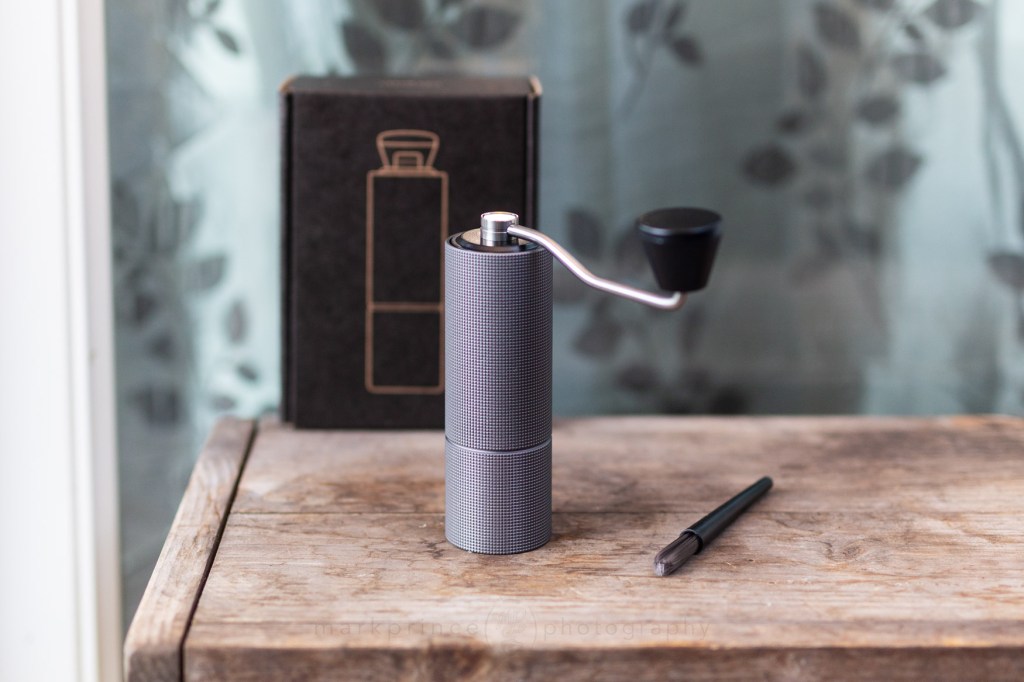
The TIMEMORE Chestnut C2 Manual Coffee Grinder represents an investment in your daily coffee experience. Its durable construction, precise grinding capabilities, and thoughtful design make it a tool that will serve you well for years to come.
The difference between a cheap blade grinder and a quality burr grinder like the Chestnut C2 is immediately apparent in your cup. The uniform particle size, adjustable settings, and consistent performance transform your coffee from a simple caffeine delivery system into a nuanced, flavorful experience that you’ll look forward to each morning.
Conclusion: Your Path to Coffee Excellence
The journey to café-quality coffee at home begins with understanding the fundamental importance of fresh grinding. Every other aspect of coffee brewing – water temperature, timing, technique – builds upon this foundation. Without fresh grinding, you’re fighting an uphill battle against staleness and oxidation.
By investing in quality equipment like the TIMEMORE Chestnut C2 and committing to grinding right before brewing, you’re not just improving your coffee; you’re elevating your entire morning routine. The difference is so significant that once you experience truly fresh-ground coffee, you’ll never want to go back to pre-ground beans.
Your perfect cup of coffee is waiting – it just needs to be ground fresh to unlock its full potential. Start your journey to coffee excellence today, and discover how the simple act of grinding before brewing can transform your daily coffee experience from ordinary to extraordinary.

 Insight Harbor
Leave a comment